
Clothing photography ghost mannequin work follows one basic method: photograph the garment on a mannequin, photograph the parts the mannequin hides, then remove the mannequin in editing so the garment appears to be worn by no one. The method is the same for every category. The details are not. A shirt, a coat, a pair of trousers, a slip dress and a chunky knit each ask something different of the mannequin, the styling and the extra shots, and a setup that works perfectly for one can quietly spoil another.
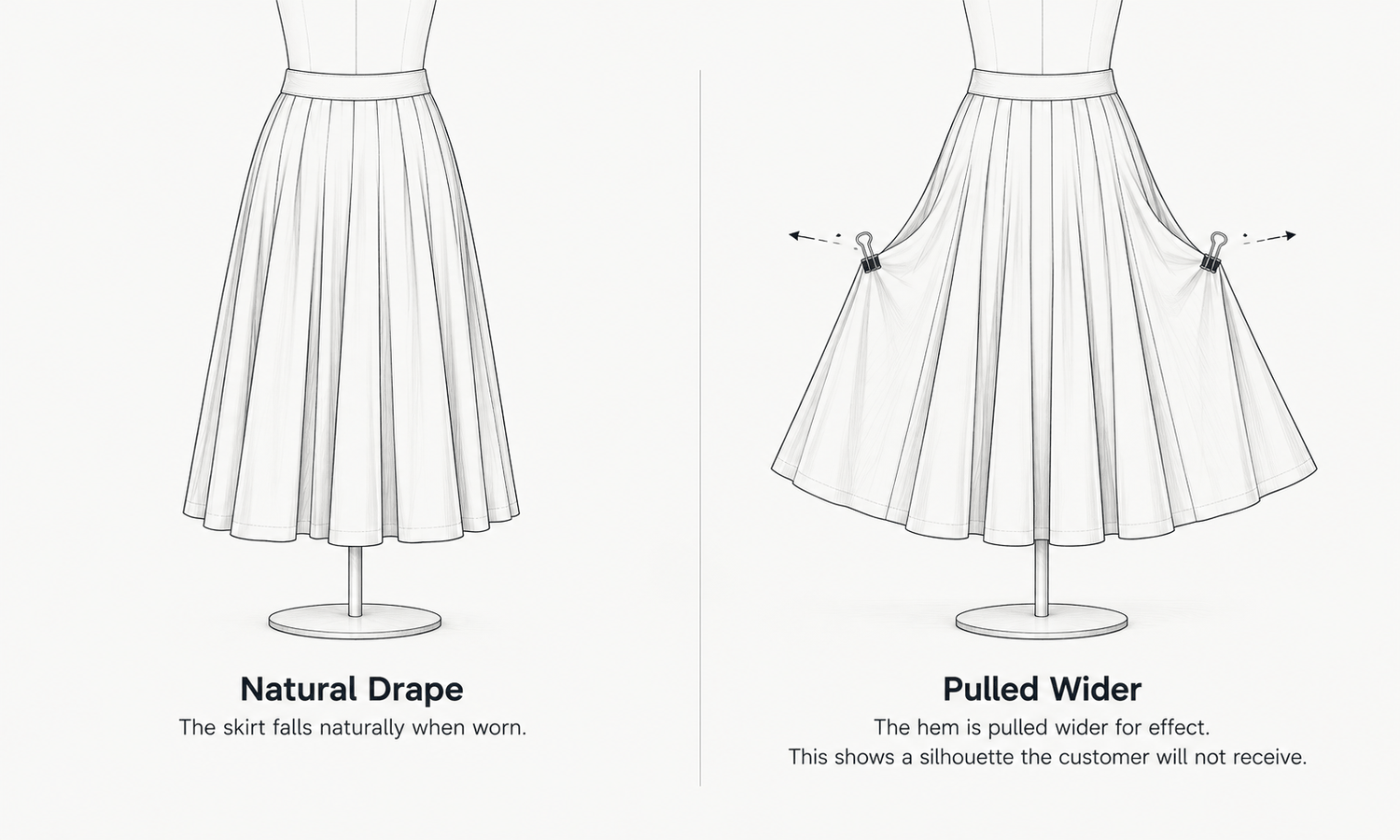
Most problems in ghost mannequin images come from treating every category the same way. Trousers shot on a torso form hang shapelessly. Knitwear on an oversized form stretches. A dress with its hem pulled wide for drama shows a silhouette the customer will never see. Knowing what each category needs is what turns a general technique into consistent, honest product images.
This article walks through ghost mannequin photography category by category: tops, shirts and knitwear; outerwear; trousers and shorts; dresses and skirts; and how to set standards across a mixed range.
| Category | Mannequin setup | Extra shots | Common problem |
|---|---|---|---|
| Shirts and tops | Torso form, correct size, neck piece removable | Inside neck and back label | Misaligned neck insert |
| Knitwear | Form one size smaller or lightly padded | Inside neck, rib detail | Stretched body or distorted ribbing |
| Outerwear | Torso form with shoulders, arms if available | Lining, inside neck, hood | Inconsistent open or closed choice |
| Trousers and shorts | Lower-body form with legs | Inside waistband | Legs twisted or unevenly shaped |
| Skirts | Lower-body or waist form | Inside waistband, back | Hem pulled wider than it hangs |
| Dresses | Full or torso form with a stand | Inside neck or straps, back | Straps slipping, bodice gaping |
Tops, Shirts and Knitwear
Tops are where most studios start, and the essentials are consistent.
For shirts and woven tops, the neckline carries the image. Fasten the buttons to the level the brand shows in all its shirt images, stand the collar as it would sit when worn and keep the placket straight down the center. Photograph the inside of the neck, with the form's neck piece removed or the shirt turned inside out, so it can be composited into the opening, and make sure the lighting matches the front shot exactly. Sleeves can hang naturally on a form without arms, or be shaped lightly with tissue so they fall at a natural angle, but they should look the same across every shirt in the category.
T-shirts are simpler, with one extra concern. If the tee carries a graphic, the print should sit flat and square to the camera, with no ripples across it, because the print is what the shopper is buying.
Knitwear needs the most care in this group. Knits stretch, and a form even slightly too large pulls the body wider, lifts the hem and distorts the ribbing at the cuffs and neck. Use a form one size smaller than you would for a woven top of the same size, or pad a smaller form lightly until the knit sits without tension. Let the ribbing at the hem and cuffs sit in its natural shape rather than pinning it flat. A knit that looks relaxed and slightly soft on the form is more honest than one stretched into a crisp silhouette it does not have.
Outerwear
Outerwear brings decisions that tops do not.
The first is open or closed. Jackets and coats can be shown fastened, which shows the silhouette and the closure, or open, which shows the lining and whatever is worn underneath. Either can work, but the choice should be the same for the whole category, so shoppers comparing coats see like with like. Many studios shoot fastened as the primary image and add an open view where the lining is a selling point.
The second is structure. Shoulders, lapels and collars carry the shape of a jacket, so the form's shoulders should match the garment's shoulder width. A form with narrow shoulders lets a tailored jacket collapse; a form with wide shoulders pushes it out of shape. Roll lapels to where they naturally fall, not flatter or sharper.
Hoods need their own attention. A hood left flat behind the neck disappears; a hood shaped with tissue into a natural curve shows its size and lining. Photograph it separately if it is removable, and add an inside view if the lining matters.
Weight matters too. Heavy coats pull downward, and their hems and sleeves should hang as they would when worn rather than being propped up.
Trousers and Shorts
Trousers are photographed on a lower-body form with legs, or on a waist form with the legs shaped by padding or tissue. A torso form alone leaves the legs hanging shapelessly and misrepresents the cut.
A reliable sequence keeps trousers consistent.
-
Fit the waist. The waistband should sit on the form at its intended height, fastened, with the form's waist matching the garment's size.
-
Shape both legs evenly. Fill or position the legs so they hang straight and match each other, without twists at the knees or ankles.
-
Set the creases and hems. Pressed creases should run straight; hems should fall at their natural length, not pulled down or pinned up.
-
Keep pockets flat. Pocket bags should not bulge, and pocket openings should lie as they do when worn.
-
Photograph the inside of the waistband. This is the trouser equivalent of the inside neck, and it is composited into the waist opening the same way.
Shorts follow the same steps, with extra attention to leg openings, which should sit evenly rather than flaring on one side.
Dresses and Skirts
Dresses and skirts are judged largely on silhouette and length, which makes honesty especially important.
For skirts, the waistband sits on a waist or lower-body form, and the inside of the waistband is photographed for compositing. The hem is where the temptation lies. Pulling a skirt's hem wider or pinning it into a fuller shape makes an image look more dramatic, but it shows a silhouette the customer will not see. Let the skirt hang as it would on a standing wearer, spreading pleats or gathers only as far as they naturally fall.
For dresses, the bodice sits on a torso or full form, with a stand below to support the skirt. Straps are the common problem: they slip on the form's shoulders, and the bodice then gapes. Secure straps from the back, and choose a form whose bust and shoulder measurements match the dress so the bodice sits closely. For slip dresses and other bias-cut or fluid styles, a smaller form often works better, since the fabric is meant to skim rather than stretch. Photograph the back whenever the back carries detail, such as a low cut, ties or a zip.
Across both, length should be true. A form set too high or too low changes where the hem appears to fall, so keep the form height consistent within the category.
Clothing Photography Ghost Mannequin Standards for a Mixed Range
A range with many categories needs a short standard for each one, so every product in a category is shot the same way. The standard names the form and its size, the styling rules such as open or closed and buttons to which level, the extra shots required and the camera height and crop. With the standard written down, anyone in the studio, or an outside studio, can produce images that match.
Editing standards follow the same logic: consistent shadow depth inside the garment, the same background and the same rules for how much creasing may be removed. Editing should remove distractions without reshaping the garment or smoothing away its texture. Every finished image is checked against the physical garment for color and detail before it is published.
Ghost mannequin images show shape without a person. Most product pages also benefit from an on-model view, and that view can come from the same garment.
In Lightchain AI (apparel AI), on-model views can be produced from the flat-lay captured alongside the ghost shoot.
-
AI Virtual Try-On places the garment on a model directly from its flat-lay, including on a saved model set, so the on-model view comes from the same garment session.
-
Model Studio keeps the model, pose and scene consistent across a category's on-model images, matching the consistency of the ghost images.
For teams that want on-model views to sit alongside their ghost mannequin images, AI Virtual Try-On is the Lightchain AI solution built around starting from the garment. The ghost mannequin images themselves remain a photography and editing workflow, and on-model imagery across many styles can scale through Scale E-commerce.
Frequently Asked Questions
What changes in clothing photography ghost mannequin work from one category to another?
The mannequin, the styling and the extra shots. Tops need a neck insert, trousers need a lower-body form and an inside-waistband shot, outerwear needs a consistent open or closed choice and knitwear needs a form that does not stretch it.
Why do knits often look wrong on a mannequin?
Because knits stretch, and a form that is slightly too large pulls the body wider and distorts the ribbing. Use a smaller or lightly padded form so the knit sits without tension.
Should jackets be shown open or closed?
Either, as long as the choice is consistent across the category. Many studios shoot fastened as the primary image and add an open view when the lining is a selling point.
How are trousers photographed as ghost images?
On a lower-body form with legs, with the waistband fastened at its intended height, both legs shaped evenly, creases straight and hems at their natural length. The inside of the waistband is photographed and composited in.
Is it acceptable to spread a skirt's hem for a fuller look?
No. Let the hem hang as it would on a standing wearer, because a spread hem shows a silhouette the customer will not receive.
How can a studio keep a mixed range consistent?
Write a short standard for each category covering the form and size, styling rules, extra shots, camera height and crop, and apply the same editing rules throughout. A written standard lets any photographer, in-house or outside, produce matching images.
Can Lightchain AI produce ghost mannequin images?
No. Ghost mannequin images come from photography and editing. Lightchain AI adds the on-model view: AI Virtual Try-On places the garment on a model from its flat-lay, which is the solution to use alongside a ghost mannequin workflow.
In Closing
Clothing photography ghost mannequin work uses one method and many category-specific details. Tops depend on a clean neck insert and consistent sleeves, knitwear on a form that does not stretch it, outerwear on a consistent open or closed choice and matching shoulders, trousers on a lower-body form and evenly shaped legs, and dresses and skirts on secure straps and hems that hang as they are worn. Write a short standard for each category, edit without reshaping and check every image against the garment.
Start Here
If your studio shoots ghost mannequin images and your product pages also need on-model views, AI Virtual Try-On is the solution to use. It is built around starting from the garment: you capture a flat-lay alongside each ghost shoot, place it on a saved model and keep on-model images as consistent as your ghost images. Start with one category, compare both views side by side on the product page, and extend to other categories from there.
**Explore AI Virtual Try-On → **https://www.lightchainai.com/global/solutions/aiVirtualTryOn